
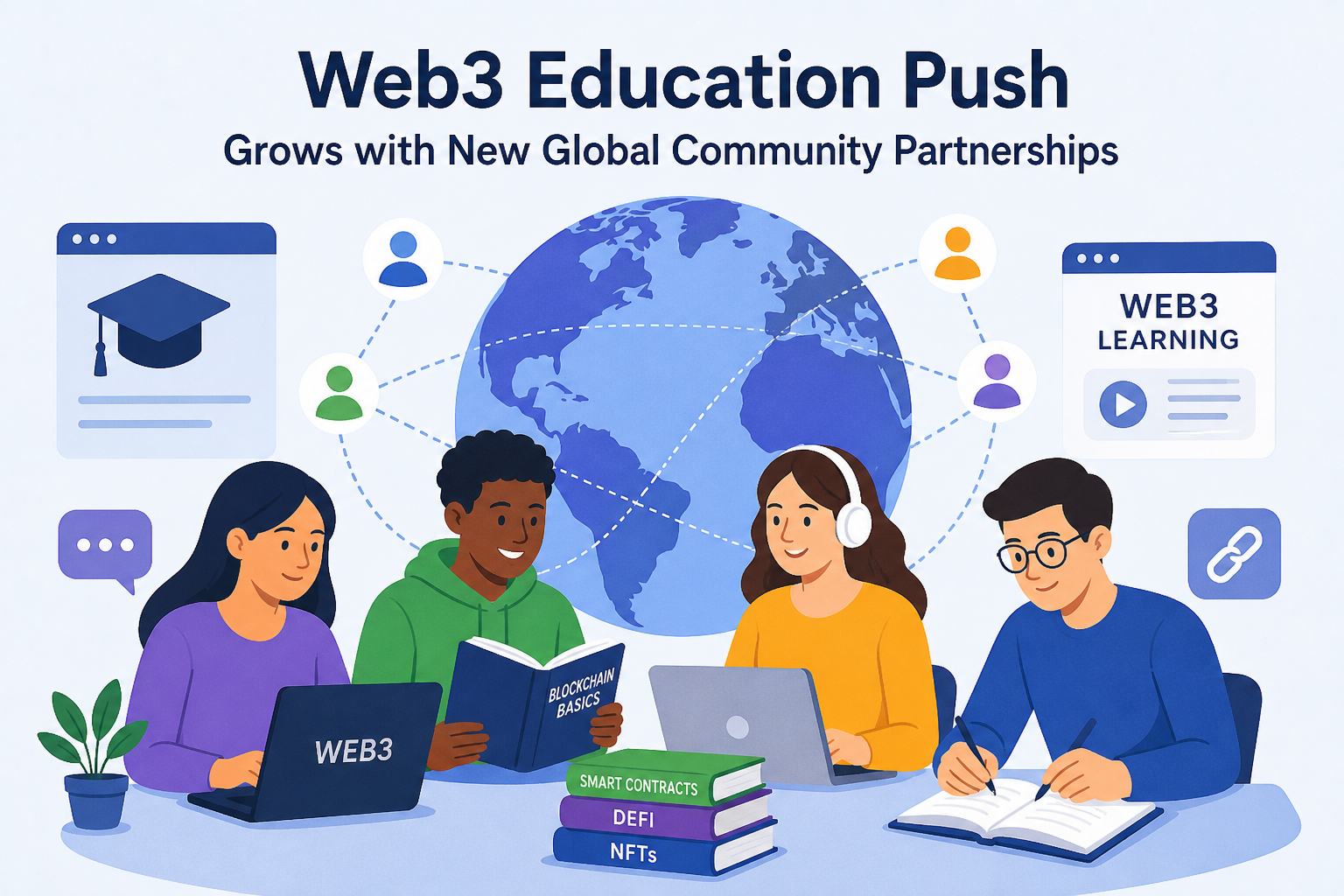
The rapid evolution of blockchain technology and decentralized ecosystems has sparked a powerful Web3 education push across the globe. As industries increasingly embrace decentralization, there is a growing demand for accessible, high-quality education that helps individuals understand and participate in this transformative digital landscape. From developers and entrepreneurs to students and policymakers, the need for comprehensive blockchain education, crypto literacy, and decentralized technology awareness has never been more urgent.
In response, a wave of new global community partnerships has emerged, bridging gaps between technology providers, educational institutions, nonprofits, and grassroots organizations. These collaborations are not only expanding access to knowledge but are also reshaping how people learn about Web3 by emphasizing inclusivity, real-world application, and community-driven growth. The Web3 education push is no longer confined to niche online forums; it is becoming a mainstream movement with global reach and long-term implications.
This article explores how the Web3 education push is growing through strategic partnerships, the impact of these collaborations on global learning ecosystems, and what it means for the future of decentralized innovation.
The Rise of Web3 Education as a Global Priority
Understanding the Need for Web3 Literacy
Blockchain adoption is growing quickly. However, many people still lack the knowledge to use it effectively. Traditional education systems often do not cover topics like smart contracts, DeFi, or digital ownership.
Because of this gap, the Web3 education push is gaining momentum. People want to learn how these systems work and how they affect finance, identity, and governance.
In addition, demand for crypto education platforms and certifications is rising. Digital skills are becoming essential in modern economies. Therefore, Web3 literacy is now as important as basic computer knowledge.
The Role of Decentralization in Education
Web3 education follows the same principles as blockchain. It focuses on openness, accessibility, and collaboration. Unlike traditional systems, it does not rely on central control.
Instead, learners can access content from anywhere. They can also share knowledge with others in real time.
This approach removes barriers such as location and cost. It also allows communities to create their own learning materials. As a result, education becomes more flexible and relevant.
Global Community Partnerships Driving Growth
Collaboration Between Tech Firms and Educational Institutions
A key driver of the Web3 education push is the collaboration between blockchain companies and academic institutions. Universities are increasingly partnering with Web3 organizations to develop specialized courses, research programs, and innovation hubs focused on distributed ledger technology.
These partnerships bring together theoretical knowledge and practical expertise, enabling students to gain hands-on experience with real-world applications. By integrating blockchain development training into formal education systems, these collaborations are preparing the next generation of Web3 professionals.
Grassroots Communities and Local Initiatives
Beyond formal institutions, grassroots communities play a crucial role in advancing the Web3 education push. Local meetups, online forums, and community-led workshops are creating accessible entry points for individuals who may not have access to traditional education resources.
These community-driven efforts often focus on crypto awareness, wallet security, and NFT fundamentals, making complex concepts easier to understand. By fostering a sense of belonging and collaboration, grassroots initiatives are helping to democratize access to Web3 knowledge.
Nonprofits and Global Outreach Programs
Nonprofit organizations are also contributing significantly to the Web3 education push by funding educational initiatives and promoting digital inclusion. Many of these organizations focus on underserved regions, where access to technology and education is limited.
Through partnerships with local communities, nonprofits are delivering blockchain workshops, online learning modules, and mentorship programs that empower individuals to participate in the digital economy. These efforts are particularly impactful in developing countries, where Web3 technologies can offer new economic opportunities.
The Impact of Web3 Education on Emerging Economies
 Unlocking Economic Opportunities
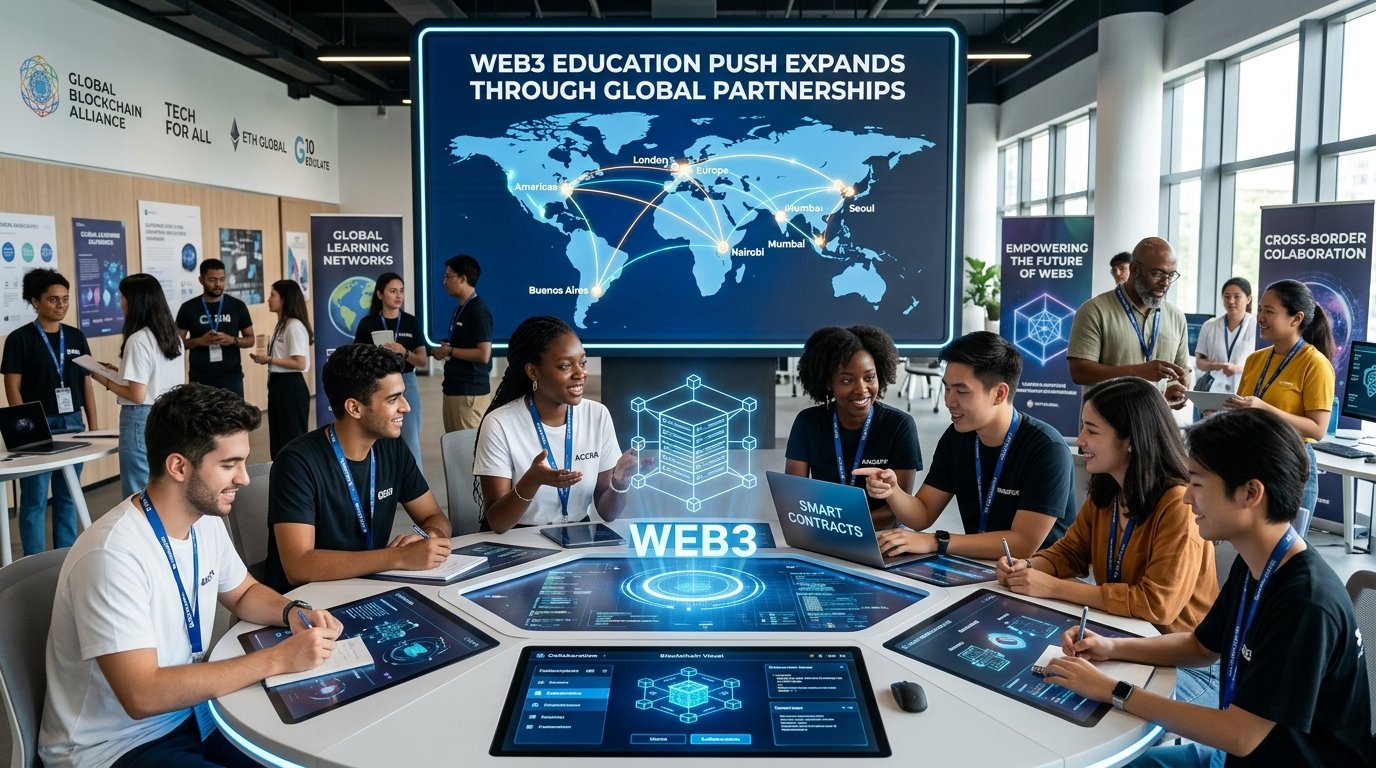
The Web3 education push is having a profound impact on emerging economies by opening up new avenues for income generation and entrepreneurship. As individuals gain skills in crypto trading, smart contract development, and digital asset management, they can participate in global markets without traditional intermediaries.
This shift is especially significant in regions with limited access to banking services. Web3 technologies enable financial inclusion, allowing people to store value, transfer funds, and access credit through decentralized platforms.
Bridging the Digital Divide
One of the most promising aspects of the Web3 education push is its potential to bridge the digital divide. By providing free or low-cost educational resources, community partnerships are ensuring that more people can access the knowledge needed to thrive in a digital economy.
Efforts to translate educational content into multiple languages and adapt it to local contexts are further enhancing accessibility. This inclusive approach is helping to create a more equitable global learning environment.
Innovative Learning Models in Web3 Education
Online Platforms and Self-Paced Learning
The rise of e-learning platforms has played a pivotal role in the Web3 education push. These platforms offer self-paced courses, interactive tutorials, and certification programs that cater to learners of all skill levels.
By leveraging gamification, microlearning, and interactive simulations, these platforms make complex topics more engaging and easier to understand. This flexibility allows individuals to learn at their own pace, making education more accessible and effective.
Experiential Learning Through DAOs
Decentralized Autonomous Organizations (DAOs) are emerging as innovative learning environments within the Web3 education push. By participating in DAOs, learners can gain practical experience in governance, decision-making, and project management.
This hands-on approach to learning not only enhances understanding but also builds valuable skills that are directly applicable to real-world scenarios. DAOs exemplify the potential of Web3 to transform education into a collaborative and experiential process.
Challenges Facing the Web3 Education Push
Lack of Standardization
Despite its rapid growth, the Web3 education push faces challenges related to the lack of standardized curricula and accreditation. With numerous platforms offering courses, it can be difficult for learners to assess the quality and credibility of educational resources.
Addressing this issue requires collaboration between industry stakeholders to establish benchmarks and best practices for Web3 education.
Security and Misinformation Risks
Another challenge is the prevalence of misinformation and security risks within the Web3 space. As newcomers enter the ecosystem, they may encounter misleading information or fall victim to scams.
Educational initiatives must prioritize cybersecurity awareness, risk management, and ethical practices to ensure that learners are well-equipped to navigate the Web3 landscape safely.
The Future of Web3 Education and Community Partnerships
Scaling Global Impact
As the Web3 education push continues to gain momentum, the role of global community partnerships will become increasingly important. By leveraging collective expertise and resources, these collaborations can scale educational initiatives and reach a broader audience.
The integration of AI-driven learning tools, virtual reality experiences, and interactive content is expected to further enhance the learning experience, making Web3 education more immersive and effective.
Building a Decentralized Knowledge Ecosystem
The long-term vision of the Web3 education push is to create a decentralized knowledge ecosystem where learning is continuous, collaborative, and accessible to all. This ecosystem will empower individuals to contribute to the growth of Web3 while benefiting from its opportunities.
By fostering a culture of innovation, inclusivity, and knowledge sharing, community partnerships are laying the foundation for a more decentralized and equitable future.
Conclusion
The Web3 education push is rapidly transforming the global learning landscape, driven by the power of community partnerships and decentralized innovation. As collaborations between tech companies, educational institutions, nonprofits, and grassroots organizations continue to expand, access to Web3 knowledge is becoming more inclusive and widespread.
This movement is not just about learning new technologies; it is about empowering individuals to participate in a decentralized digital economy and shape the future of innovation. While challenges remain, the ongoing efforts to improve accessibility, standardization, and security are paving the way for sustainable growth.
Ultimately, the Web3 education push represents a fundamental shift in how knowledge is shared and consumed. By embracing collaboration and decentralization, it is creating new opportunities for individuals and communities around the world.
FAQs
Q. What is the Web3 education push?
The Web3 education push refers to the global effort to promote learning and awareness of blockchain, decentralized technologies, and digital assets through accessible and community-driven initiatives.
Q. Why are global partnerships important in Web3 education?
Global partnerships bring together resources, expertise, and diverse perspectives, enabling the creation of comprehensive and inclusive educational programs that reach a wider audience.
Q. How can beginners start learning about Web3?
Beginners can start with online courses, community workshops, and free educational resources that cover basic concepts like blockchain, cryptocurrencies, and decentralized applications.
Q. What role do communities play in Web3 education?
Communities are central to the Web3 education push, as they facilitate peer-to-peer learning, provide support, and create opportunities for collaboration and real-world experience.
Q. What challenges does Web3 education face?
Key challenges include lack of standardization, misinformation, and security risks, which require ongoing efforts to improve quality, transparency, and user awareness.
