
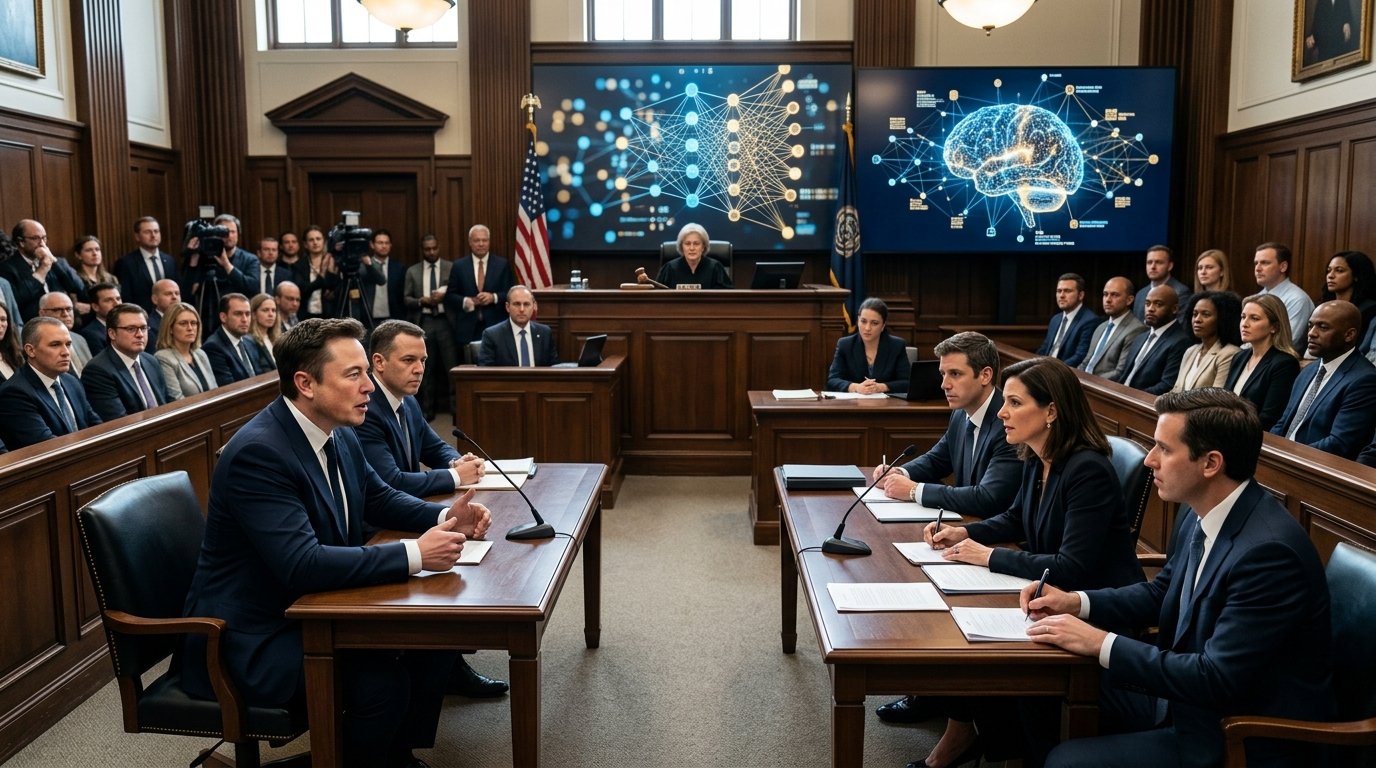
The long-running legal showdown between Elon Musk and OpenAI has entered one of its most dramatic phases yet. After months of heated exchanges, accusations, leaked communications, and intense courtroom battles, the case has officially moved toward a jury decision following what many legal analysts described as “scorched-earth” closing arguments. The lawsuit has become far more than a personal dispute between former collaborators. It now represents a defining conflict over the future of artificial intelligence, corporate power, transparency, and the ethical direction of advanced AI systems.
The case has captured worldwide attention because it combines several explosive elements at once. On one side stands Musk, one of the world’s most influential technology figures and an early supporter of OpenAI. On the other side is OpenAI itself, the organization behind transformative AI technologies that reshaped industries, businesses, education, and digital communication. What began as a mission to develop AI for the benefit of humanity allegedly evolved into a dispute over profit motives, corporate restructuring, and the race for AI dominance.
The courtroom proceedings have revealed internal disagreements, private communications, and competing visions for the future of artificial intelligence. Musk claims OpenAI abandoned its original nonprofit mission and prioritized commercial interests. OpenAI argues that Musk’s allegations distort the company’s evolution and ignore the realities of developing expensive, cutting-edge AI models. The jury now faces the difficult task of deciding which narrative carries greater legal and ethical weight.
As the world waits for a verdict, the implications extend far beyond Silicon Valley. The outcome could influence AI governance, corporate accountability, partnerships between tech companies, and the balance between innovation and public interest. The Musk v. OpenAI dispute is no longer just another tech lawsuit. It has become a symbolic battle over who controls the future of artificial intelligence.
The Origins of the Musk and OpenAI Relationship
The roots of the conflict trace back to OpenAI’s early days. Elon Musk was among the high-profile figures who helped launch the organization with the stated mission of creating safe and beneficial artificial intelligence for humanity. At the time, OpenAI positioned itself as a nonprofit research entity focused on transparency and collaboration rather than aggressive commercialization.
Musk publicly warned about the dangers of uncontrolled AI development for years. His involvement with OpenAI reflected those concerns. He envisioned an organization capable of competing with major technology corporations while remaining committed to public benefit rather than shareholder profits. This founding philosophy became a central issue in the courtroom battle.
Over time, however, OpenAI evolved significantly. The enormous computational costs associated with advanced AI development pushed the company toward a hybrid structure that allowed it to attract substantial investments. Strategic partnerships and commercial products accelerated OpenAI’s rise, especially after the global success of generative AI tools. Critics argued that the company had drifted away from its nonprofit origins, while supporters claimed the changes were necessary for survival and innovation.
Musk eventually distanced himself from OpenAI. The separation later escalated into open criticism as he accused the company of abandoning its original mission. The legal battle that followed transformed these disagreements into one of the most closely watched corporate disputes in modern technology history.
Why the Lawsuit Became So Significant
The significance of the Musk v. OpenAI lawsuit lies in what it represents for the broader AI industry. Artificial intelligence has rapidly become one of the most valuable and strategically important sectors in the global economy. Governments, corporations, and investors all recognize the transformative power of advanced AI systems.
Because OpenAI sits at the center of this revolution, every accusation against the company carries major consequences. Musk’s legal claims raised questions about whether AI organizations can remain faithful to ethical commitments while competing in a high-stakes commercial environment. The lawsuit also intensified ongoing debates about transparency, data access, safety standards, and the concentration of AI power in a small number of companies.
The courtroom drama became even more intense because Musk himself launched competing AI initiatives after leaving OpenAI. Critics suggested the lawsuit was partially motivated by business rivalry, while supporters argued Musk was exposing legitimate concerns about accountability and corporate control. These competing interpretations added another layer of complexity to the trial.
Public fascination with the case also stems from the personalities involved. Musk’s reputation for confrontational public battles combined with OpenAI’s extraordinary influence created a media spectacle unlike any previous AI dispute. Every court filing, statement, and hearing generated enormous online discussion, making the case a defining moment in the relationship between technology, law, and public perception.
Scorched-Earth Closing Arguments Intensify the Battle
As the trial approached its final stage, tensions escalated dramatically during closing arguments. Attorneys on both sides delivered aggressive presentations designed to persuade jurors not only legally but emotionally. Observers described the proceedings as a “scorched-earth” confrontation because neither side showed any willingness to soften its attacks.
Musk’s legal team argued that OpenAI fundamentally betrayed the principles upon which it was founded. According to their presentation, the company shifted from a mission-driven nonprofit organization into a commercially motivated AI powerhouse closely aligned with corporate interests. They emphasized internal communications and organizational changes as evidence that OpenAI knowingly moved away from its original commitments.
The legal team portrayed Musk as someone attempting to preserve the ethical foundations of AI development. They argued that public trust in artificial intelligence depends on transparency, accountability, and adherence to founding promises. By framing the dispute as a fight over humanity’s technological future, Musk’s attorneys attempted to elevate the case beyond ordinary corporate litigation.
OpenAI’s lawyers responded forcefully. They argued that Musk’s claims ignored the practical realities of developing advanced AI technologies. According to the defense, the company’s evolution was necessary to secure funding, infrastructure, and talent capable of competing in the rapidly intensifying AI race. They accused Musk of misrepresenting OpenAI’s intentions while pursuing his own competing interests in artificial intelligence.
The defense also challenged Musk’s credibility by emphasizing his departure from OpenAI years earlier and highlighting disagreements that existed even during the organization’s early development. Their argument focused on portraying the lawsuit as an attempt to interfere with a successful competitor rather than a genuine ethical crusade.
These explosive closing arguments left jurors facing sharply contrasting narratives. One side framed the case as a betrayal of public trust. The other portrayed it as a distortion driven by rivalry and ambition.
The Role of AI Ethics in the Trial
One of the most important aspects of the trial has been its focus on AI ethics. While many corporate lawsuits revolve around contracts or financial disputes, this case touched deeply on philosophical questions about technological responsibility.
Artificial intelligence possesses extraordinary capabilities that could reshape economies, governments, and daily life. Because of this, ethical concerns surrounding AI development have become increasingly urgent. The trial repeatedly raised questions about whether companies developing advanced AI systems should prioritize public benefit over profit maximization.
Musk’s arguments centered heavily on this theme. He claimed OpenAI’s original mission emphasized open collaboration and safety. According to his legal team, the organization’s later shift toward commercial secrecy and competitive positioning undermined those principles.
OpenAI countered by arguing that responsible AI development requires substantial resources. The company maintained that partnerships, commercialization, and investment structures were necessary to continue building safe and effective AI technologies. Without large-scale funding, they argued, the organization would struggle to compete against other powerful technology firms.
The ethical debate resonated strongly because it reflects broader anxieties surrounding artificial intelligence. Many people fear that AI development is moving too quickly without sufficient oversight or accountability. Others believe excessive regulation or restrictions could slow innovation and prevent beneficial breakthroughs.
The jury’s decision may not directly settle these philosophical questions, but the trial has already intensified global discussion about the responsibilities of AI companies and the future governance of emerging technologies.
Corporate Power and the AI Arms Race
Another major issue highlighted during the trial is the growing concentration of power within the AI industry. Developing advanced AI systems requires enormous computational resources, specialized talent, and billions of dollars in investment. As a result, only a small number of organizations possess the capability to compete at the highest level.
This concentration of power has fueled concerns about monopolization, influence, and access to transformative technologies. Critics worry that a handful of corporations could dominate the future of artificial intelligence, shaping economic systems and information ecosystems according to their own priorities.
The Musk v. OpenAI case exposed many of these tensions. Musk’s legal team argued that OpenAI’s transformation reflected the broader commercialization of AI and the increasing influence of corporate partnerships. They suggested that public interest could become secondary to market dominance and competitive advantage.
Meanwhile, OpenAI defended its approach as necessary within an intensely competitive environment. The company argued that large-scale AI research cannot succeed without massive investment and infrastructure support. In their view, commercialization enabled continued innovation rather than undermining ethical goals.
The trial therefore became a symbolic representation of the global AI arms race. Nations and corporations are competing aggressively to achieve technological leadership, and the stakes involve economic influence, military applications, and strategic dominance. This context made the courtroom conflict even more consequential.
Public Reaction and Media Frenzy
The public response to the lawsuit has been extraordinary. Social media platforms, news organizations, technology analysts, and legal experts closely followed every development. The combination of Elon Musk’s celebrity status and OpenAI’s prominence guaranteed enormous global attention.
Supporters of Musk praised him for challenging what they viewed as excessive corporate control over artificial intelligence. They argued that his legal battle highlighted legitimate concerns about transparency and accountability. Some also viewed Musk as one of the few individuals powerful enough to confront major AI organizations publicly.
OpenAI supporters, however, accused Musk of hypocrisy and strategic self-interest. Critics pointed out that Musk launched competing AI ventures and questioned whether the lawsuit truly stemmed from ethical concerns. They argued that OpenAI’s commercial evolution reflected unavoidable realities rather than betrayal.
The media frenzy surrounding the trial demonstrated how deeply AI has entered mainstream public consciousness. Artificial intelligence is no longer a niche technological subject discussed only by researchers. It now influences politics, employment, education, entertainment, and daily digital experiences.
Because of this widespread impact, the outcome of the trial carries symbolic significance for millions of people trying to understand how AI should be developed and governed.
What the Jury Decision Could Mean
The jury’s decision could have far-reaching consequences for both OpenAI and the broader technology industry. A ruling favorable to Musk might encourage greater scrutiny of AI companies and strengthen demands for transparency regarding corporate structures and founding missions.
Such a verdict could also influence future legal disputes involving nonprofit conversions, corporate partnerships, and fiduciary responsibilities in technology organizations. Investors and executives may become more cautious when restructuring mission-driven organizations into commercially aggressive enterprises.
On the other hand, a victory for OpenAI could reinforce the argument that large-scale commercialization is essential for advanced AI development. It may validate hybrid organizational models designed to attract investment while pursuing ambitious research goals.
Regardless of the outcome, the case has already reshaped public discussion about artificial intelligence. Governments and regulators worldwide are increasingly considering policies related to AI safety, transparency, and competition. The trial added urgency to those conversations by revealing internal tensions within one of the world’s most influential AI organizations.
The verdict may also affect public trust in AI companies. If jurors conclude that ethical commitments were compromised, skepticism toward major AI corporations could intensify. Conversely, if OpenAI prevails convincingly, supporters may view the company’s evolution as justified and necessary.
The Broader Future of Artificial Intelligence
Beyond the courtroom, the Musk v. OpenAI conflict reflects deeper questions about humanity’s relationship with artificial intelligence. AI technologies are advancing rapidly, influencing industries ranging from healthcare and finance to transportation and media. Decisions made today could shape global society for decades.
One major challenge involves balancing innovation with accountability. Rapid AI progress offers enormous opportunities for scientific breakthroughs, productivity gains, and economic growth. However, unchecked development also carries risks related to misinformation, surveillance, labor disruption, and autonomous decision-making.
The trial highlighted how difficult it can be to maintain idealistic missions within intensely competitive technological environments. Organizations that begin with public-interest goals may eventually face pressures from investors, markets, and geopolitical competition.
This tension is unlikely to disappear. As AI systems become more powerful, debates about governance, ethics, ownership, and regulation will only grow more intense. The lawsuit between Musk and OpenAI may ultimately be remembered not merely as a corporate dispute but as an early chapter in the global struggle to define the future of artificial intelligence.
Conclusion
The dramatic courtroom battle between Elon Musk and OpenAI has become one of the most consequential legal disputes in modern technology history. What started as disagreements over organizational direction evolved into a high-stakes conflict involving ethics, corporate power, transparency, and the future of AI development.
The scorched-earth closing arguments underscored how deeply divided the two sides remain. Musk presented himself as defending the original mission of responsible AI development, while OpenAI argued that commercialization was essential for technological progress and competitiveness. Jurors now hold the responsibility of deciding which narrative carries greater legal and moral credibility.
Regardless of the verdict, the case has already influenced global conversations about artificial intelligence. It exposed the immense pressures shaping AI companies and raised urgent questions about accountability in one of the world’s most transformative industries. As governments, businesses, and societies continue navigating the AI revolution, the outcome of Musk v. OpenAI may shape legal and ethical frameworks for years to come.
