
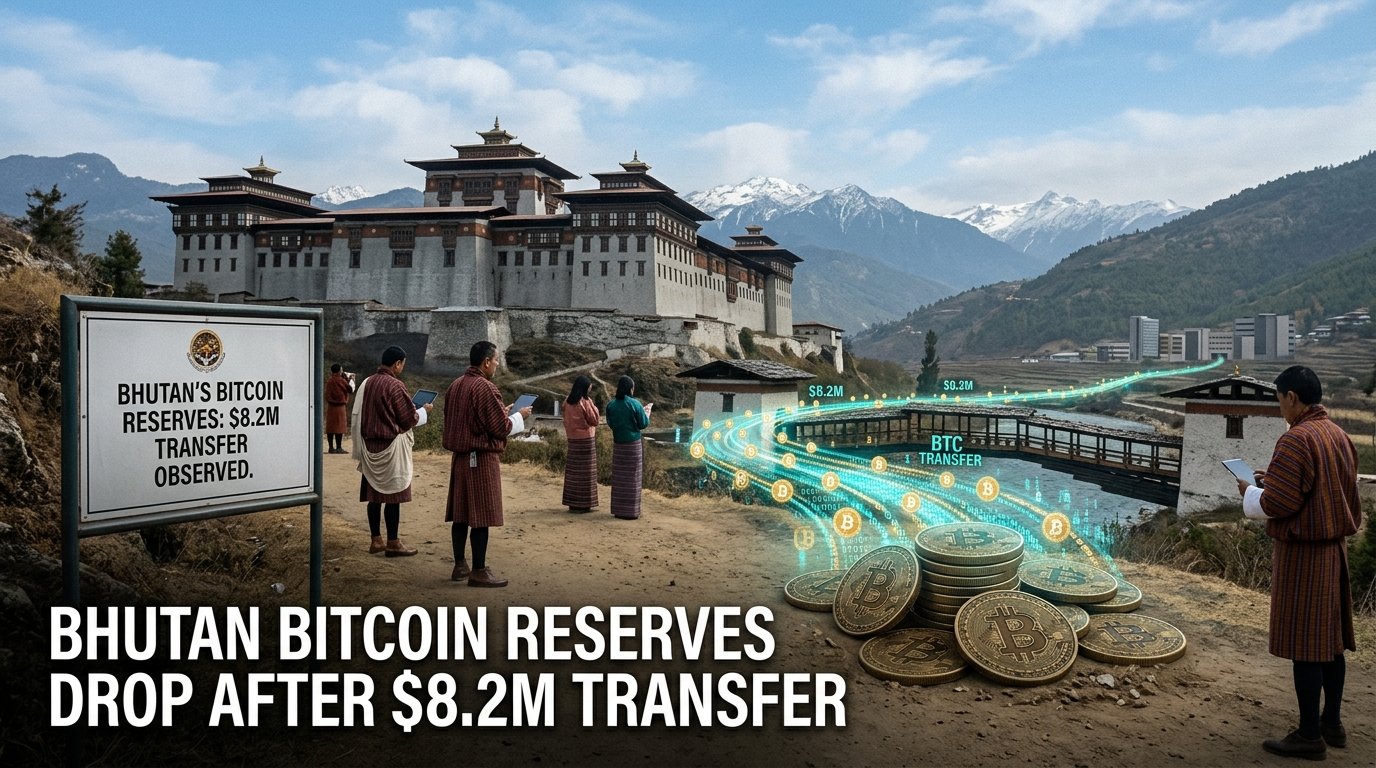
Bhutan has once again attracted global attention after moving another $8.2 million worth of Bitcoin, fueling speculation about the future of the country’s digital asset strategy. The Himalayan kingdom has quietly become one of the world’s most fascinating state-level Bitcoin holders over the past few years. While many governments remain skeptical about cryptocurrencies, Bhutan has steadily accumulated Bitcoin through state-backed mining operations powered by renewable hydroelectric energy.
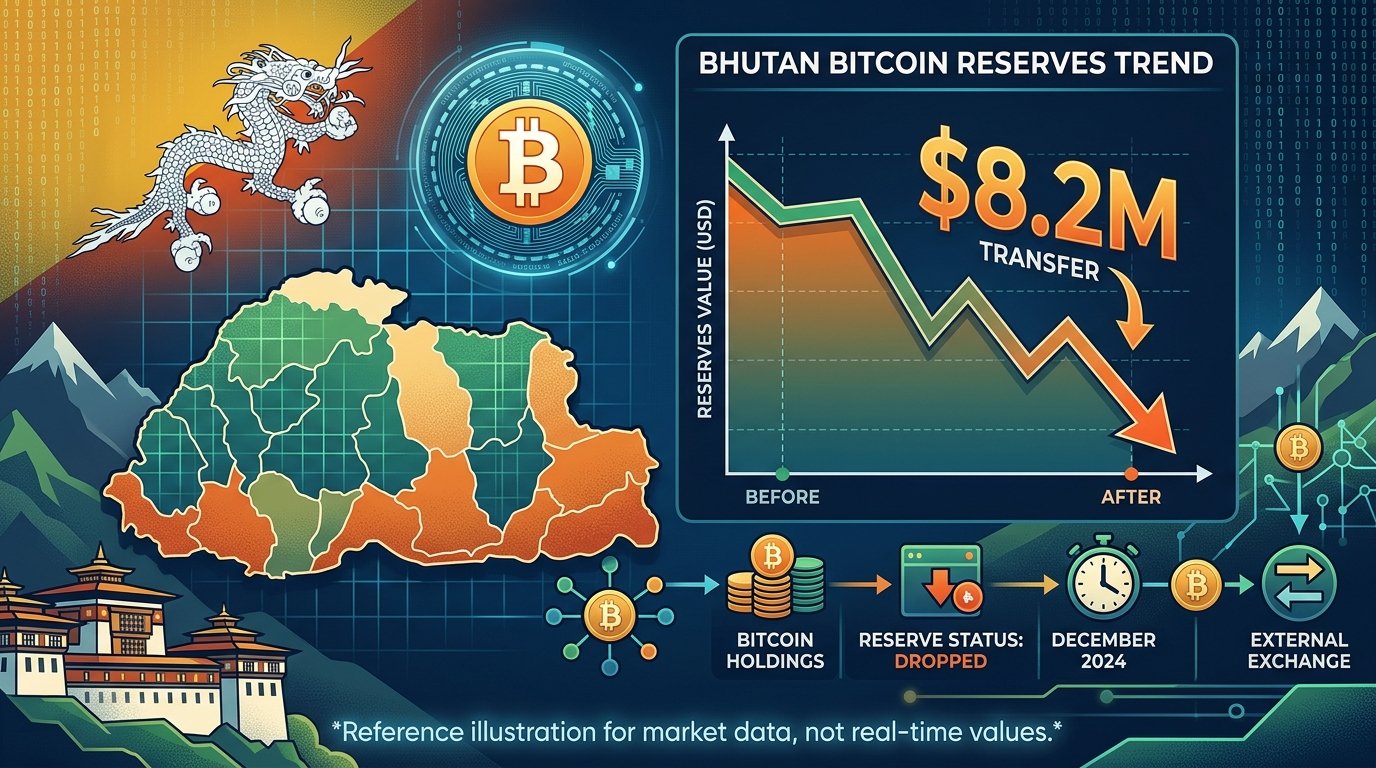
However, recent blockchain activity shows a different trend emerging. Bhutan’s Bitcoin reserves have reportedly continued to decline as additional transfers leave government-linked wallets. The latest movement has sparked discussions among crypto analysts, institutional investors, and blockchain researchers who closely monitor sovereign Bitcoin holdings. Questions are now being raised about whether Bhutan is simply restructuring its crypto reserves, cashing out to support economic initiatives, or preparing for a broader financial strategy involving digital assets.
The latest transfer also arrives during a period of heightened market volatility. Bitcoin prices remain highly sensitive to macroeconomic conditions, regulatory developments, and institutional flows. Because of this, even relatively small state-level transfers can influence market sentiment and trigger widespread speculation across the crypto industry.
As Bhutan continues to manage its digital asset treasury, the world is paying close attention. The country’s approach to Bitcoin reserves, sustainable crypto mining, and sovereign blockchain adoption could shape how smaller nations interact with decentralized finance in the future.
Bhutan’s Growing Relationship With Bitcoin
Bhutan’s involvement with Bitcoin did not happen overnight. Over the last several years, the country gradually developed a sophisticated crypto mining ecosystem powered almost entirely by clean hydroelectric energy. Unlike many mining operations criticized for excessive carbon emissions, Bhutan positioned itself as an environmentally sustainable Bitcoin mining participant.
The government reportedly worked through sovereign investment entities and strategic partnerships to build mining infrastructure capable of generating significant Bitcoin holdings. This approach allowed Bhutan to accumulate digital assets without directly purchasing large quantities of Bitcoin on the open market.
The strategy quickly drew international attention because Bhutan’s economy is relatively small compared to major crypto-investing nations. Despite its modest size, the kingdom managed to establish itself as one of the most notable government-linked Bitcoin holders in the world.
At the core of Bhutan’s crypto strategy is the belief that digital assets can diversify national reserves and create new revenue streams. Bitcoin mining provided an opportunity to monetize excess hydroelectric power while participating in the rapidly growing blockchain economy.
The latest Bitcoin transfer activity, however, suggests the country may now be entering a new phase of treasury management.
Why Bhutan Moved Another $8.2M in Bitcoin
Blockchain tracking platforms recently identified another transfer linked to Bhutanese state-controlled wallets. The movement involved approximately $8.2 million in Bitcoin, adding to a series of transactions that have gradually reduced the nation’s visible BTC reserves.
Although Bhutanese authorities have not officially commented on the transaction, several theories have emerged regarding the purpose behind the movement.
One possibility is that the transfer reflects standard treasury management. Governments and institutions frequently move digital assets between custodial wallets, exchanges, or cold storage systems for security and operational reasons. In this case, the transfer may not necessarily indicate selling pressure.
Another interpretation is that Bhutan could be liquidating portions of its Bitcoin reserves to fund domestic economic initiatives. Like many countries, Bhutan faces economic development challenges, infrastructure demands, and fiscal pressures. Selling a small percentage of Bitcoin holdings during periods of elevated market prices could provide valuable liquidity without dramatically impacting long-term reserves.
Some analysts also believe Bhutan may be diversifying its sovereign digital asset portfolio. Instead of relying heavily on Bitcoin alone, the country could be reallocating funds into other blockchain-related investments or financial instruments.
Regardless of the exact reason, the transfer highlights how sovereign Bitcoin holdings are becoming increasingly dynamic rather than static reserve assets.
The Decline in Bhutan’s Bitcoin Reserves
The most notable concern surrounding the latest transaction is the continued decline in Bhutan’s visible Bitcoin reserves. Blockchain analytics firms monitoring state-linked wallets have observed a gradual reduction over recent months.
This trend has fueled debate within the cryptocurrency community. Some investors worry that ongoing reserve reductions could signal weakening confidence in Bitcoin’s long-term value. Others argue the movements simply represent strategic financial planning rather than bearish sentiment.
It is important to recognize that sovereign reserve management differs significantly from individual investing behavior. Governments often adjust asset allocations based on changing economic conditions, fiscal priorities, and geopolitical considerations.
Bhutan may also be attempting to realize profits generated during Bitcoin’s recent market rallies. Since many of its holdings were mined at comparatively low operational costs, even partial sales could generate substantial gains for the country.
The decline in reserves nevertheless remains significant because Bhutan has frequently been viewed as a model for state-level Bitcoin adoption. Any sustained reduction in holdings naturally attracts attention from global investors and policymakers.
How Bhutan Became a Major Bitcoin Holder
Bhutan’s rise as a major Bitcoin holder surprised much of the financial world. Unlike countries that acquired Bitcoin through seizures, donations, or direct purchases, Bhutan leveraged renewable energy resources to build its crypto reserves organically.
Hydroelectric power became the foundation of this strategy. Bhutan generates abundant clean electricity from mountain-fed rivers, often producing surplus energy beyond domestic consumption needs. Instead of allowing excess power to remain underutilized, the country directed portions of it toward Bitcoin mining.
This approach created several advantages. First, mining allowed Bhutan to obtain Bitcoin without large upfront purchases. Second, renewable energy helped reduce environmental criticism associated with crypto mining. Third, digital assets provided an alternative source of national income.
As Bitcoin prices climbed over time, the value of Bhutan’s reserves increased significantly. Reports from blockchain intelligence firms suggested the country accumulated hundreds of millions of dollars worth of BTC at various stages.
The nation’s mining strategy also aligned with its broader emphasis on sustainability and innovation. Bhutan has long promoted environmentally conscious development policies, making renewable-powered crypto mining a logical extension of its economic philosophy.
Market Reaction to Bhutan’s Bitcoin Transfers
Whenever government-linked Bitcoin wallets move funds, the crypto market tends to react quickly. Traders and analysts monitor sovereign wallet activity closely because state transactions can influence market sentiment.
Bhutan’s latest $8.2 million transfer triggered renewed discussion across social media platforms and crypto news outlets. While the amount itself is relatively small compared to daily Bitcoin trading volumes, the symbolic significance remains important.
Investors often interpret government wallet movements as indicators of confidence or concern regarding future market conditions. If a nation appears to be reducing its holdings consistently, some traders may view the activity as bearish.
However, many crypto analysts caution against overreacting to such transfers. Wallet movements do not always indicate immediate selling activity. Funds may simply be moving between custodial platforms or internal treasury accounts.
The broader Bitcoin market also remains heavily influenced by institutional ETFs, macroeconomic policy, and global liquidity conditions. Compared to these factors, Bhutan’s transfer represents a relatively modest event.
Still, sovereign Bitcoin activity continues to hold psychological importance because it reflects how governments are interacting with decentralized financial systems.
Sovereign Bitcoin Holdings and Global Trends
Bhutan is not the only government exploring Bitcoin exposure. Several countries now hold digital assets directly or indirectly through various mechanisms.
Some nations acquired Bitcoin through law enforcement seizures, while others embraced mining operations or national crypto initiatives. Governments increasingly recognize that blockchain technology and decentralized finance could reshape the global monetary system over the coming decades.
The rise of sovereign Bitcoin reserves represents a major shift in financial thinking. Traditionally, countries relied on gold, foreign currencies, and government bonds as reserve assets. Bitcoin introduces a decentralized alternative that operates outside conventional monetary systems.
Supporters argue that Bitcoin offers protection against inflation, currency debasement, and geopolitical instability. Critics, however, point to volatility, regulatory uncertainty, and cybersecurity risks.
Bhutan’s strategy has been especially interesting because it combines renewable energy development with digital asset accumulation. The country effectively transformed natural resources into exposure to the cryptocurrency market.
As more governments evaluate blockchain technologies, Bhutan’s experience may serve as a valuable case study for smaller nations considering similar approaches.
The Role of Renewable Energy in Bhutan’s Crypto Mining
One reason Bhutan’s Bitcoin strategy attracted praise is its reliance on clean energy. Environmental concerns remain one of the biggest criticisms facing the cryptocurrency industry, particularly Bitcoin mining.
Large-scale mining operations often consume enormous amounts of electricity, leading to accusations of environmental damage. Bhutan attempted to address this issue by using renewable hydroelectric energy instead of fossil fuels.
The country’s mountainous geography and extensive river systems provide ideal conditions for hydroelectric generation. This allowed Bhutan to participate in Bitcoin mining while maintaining its environmental commitments.
Renewable-powered mining also created economic opportunities. Excess electricity that might otherwise go unused could instead generate digital assets with global market value.
This model has inspired discussions about whether other renewable-rich nations could adopt similar strategies. Countries with abundant hydroelectric, geothermal, or solar resources may eventually see crypto mining as a method of monetizing surplus energy production.
Bhutan’s experience demonstrates how blockchain technology can intersect with sustainable energy initiatives in innovative ways.
Could Bhutan Be Preparing for a New Crypto Strategy?
The ongoing decline in reserves has led some observers to speculate that Bhutan could be restructuring its digital asset strategy entirely.
One possibility is that the country plans to shift toward broader blockchain investments beyond Bitcoin mining. Emerging sectors such as tokenized finance, decentralized infrastructure, and blockchain-based payment systems may offer new opportunities for economic diversification.
Bhutan could also be increasing its focus on financial stability rather than aggressive reserve accumulation. Governments must balance innovation with fiscal responsibility, especially during periods of market uncertainty.
Another theory suggests the country may simply be optimizing profits from earlier mining operations. If Bitcoin mined at relatively low costs can now be sold at significantly higher valuations, selective liquidations may represent prudent treasury management rather than reduced confidence.
The lack of official communication leaves room for speculation, but the situation highlights the evolving nature of sovereign crypto adoption.
Bitcoin’s Role in National Financial Reserves
Bitcoin’s emergence as a reserve asset remains one of the most controversial developments in modern finance. Traditional reserve assets such as gold and foreign currencies have long provided governments with stability and liquidity.
Bitcoin challenges these conventions by offering a decentralized store of value independent of central banks. Its fixed supply and borderless nature appeal to supporters who view it as “digital gold.”
For smaller economies like Bhutan, Bitcoin may provide unique advantages. Diversification away from traditional reserve systems can reduce dependence on external financial institutions and major global currencies.
At the same time, Bitcoin’s volatility introduces substantial risks. Sharp price swings can significantly impact the value of national reserves within short periods.
Bhutan’s actions therefore carry broader significance beyond the immediate transfer itself. The country represents an early experiment in sovereign-level Bitcoin reserve management.
How Bhutan navigates future crypto decisions may influence other governments considering similar strategies.
Transparency and Blockchain Monitoring
One reason Bhutan’s Bitcoin movements receive so much attention is the transparency of blockchain technology. Unlike traditional financial systems, public blockchains allow analysts to track wallet activity in real time.
Blockchain intelligence firms regularly monitor large wallets associated with exchanges, institutions, and governments. When significant transfers occur, the information quickly spreads throughout the crypto community.
This transparency creates both advantages and challenges for sovereign Bitcoin holders. On one hand, public visibility promotes accountability and market awareness. On the other hand, it can generate speculation and volatility whenever transactions occur.
Bhutan’s recent transfers illustrate how blockchain analytics have transformed financial monitoring. Even governments operating quietly in the crypto space cannot easily avoid public scrutiny once wallet addresses become linked to state entities.
As sovereign crypto adoption grows, transparency will likely remain a defining characteristic of blockchain-based reserve management.
The Future of Bhutan’s Bitcoin Holdings
The future direction of Bhutan’s Bitcoin strategy remains uncertain, but the country will likely continue playing an important role in global crypto discussions.
If Bitcoin prices continue rising over the long term, Bhutan’s early mining activities could prove highly profitable despite recent reserve reductions. The country may still maintain substantial holdings even after multiple transfers.
At the same time, Bhutan could gradually adopt a more balanced approach that prioritizes economic stability over aggressive crypto accumulation. Treasury diversification and periodic profit-taking are common practices among institutional investors and governments alike.
What remains clear is that Bhutan has already established itself as one of the most innovative nations in the digital asset space. Its renewable-energy-powered mining model demonstrated how smaller economies can participate meaningfully in the blockchain revolution.
The latest $8.2 million Bitcoin transfer may represent only one chapter in a much larger story about the intersection of cryptocurrency, sovereign finance, and sustainable energy.
Conclusion
Bhutan’s decision to move another $8.2 million in Bitcoin has intensified attention on the country’s evolving cryptocurrency strategy. As state reserves continue declining, analysts and investors are closely monitoring whether these transfers indicate treasury restructuring, profit-taking, or a broader shift in policy.
The Himalayan kingdom remains one of the most fascinating examples of sovereign Bitcoin adoption. Through renewable-powered mining operations, Bhutan successfully transformed surplus hydroelectric energy into valuable digital assets, positioning itself uniquely within the global crypto economy.
Although reserve reductions have sparked speculation, the long-term significance of Bhutan’s Bitcoin strategy extends beyond individual transactions. The country has shown how governments can engage with blockchain technology creatively while pursuing sustainable economic goals.
As cryptocurrencies continue reshaping global finance, Bhutan’s actions may provide important lessons for other nations exploring digital asset reserves and renewable-energy-based mining initiatives.
