
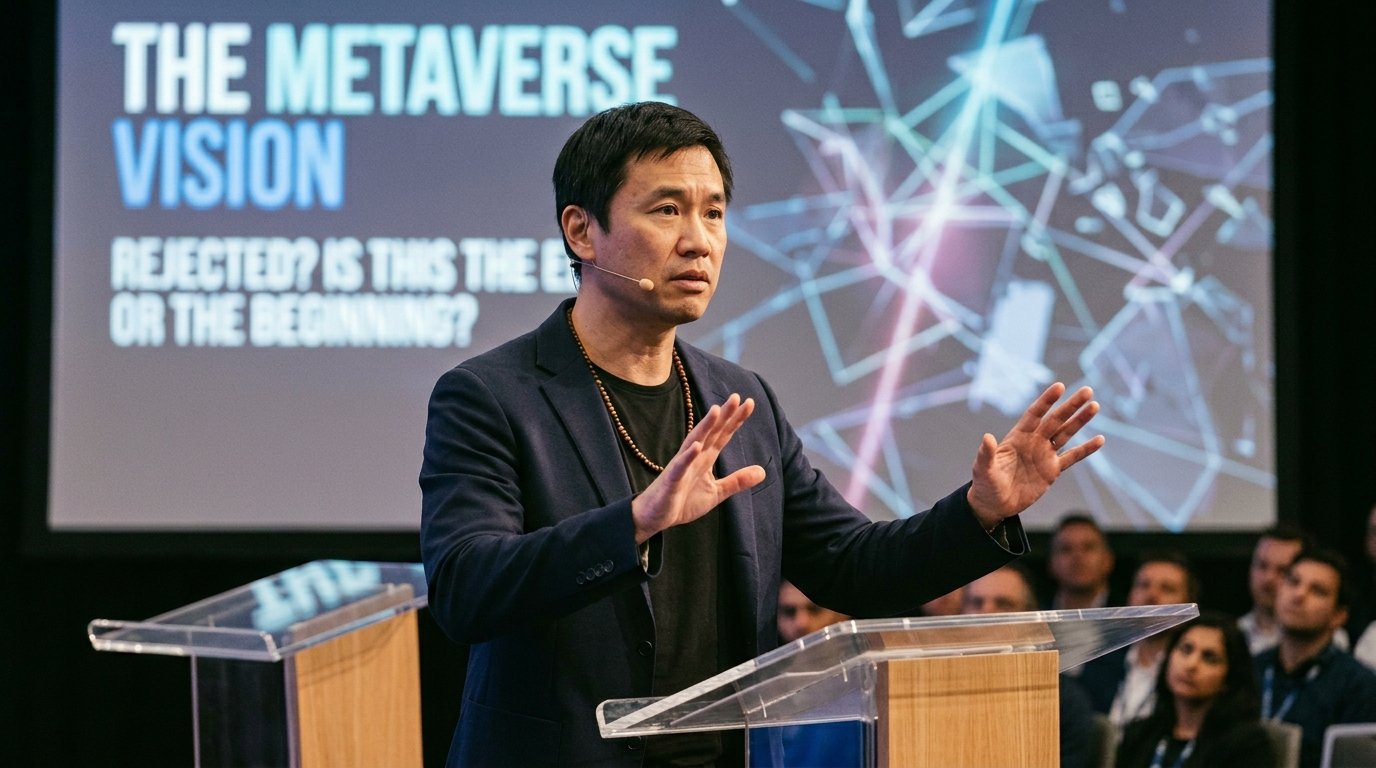
The conversation around the metaverse has shifted dramatically over the past few years, moving from futuristic excitement to skepticism and strategic reevaluation. At the center of this debate is Yat Siu, a leading voice in blockchain gaming and Web3 development. His stance has surprised many in the tech and crypto industries, especially because he has been one of the earliest supporters of virtual economies and digital ownership.
Yet, Why Yat Siu rejects the metaverse is not a rejection of virtual worlds themselves. Instead, it is a deeper critique of how the term “metaverse” has been defined, commercialized, and misunderstood. Rather than a single, closed digital universe controlled by corporations, Siu advocates for a decentralized, interoperable ecosystem built on blockchain gaming, digital ownership, and open Web3 economies.
This distinction is crucial. While mainstream narratives often portray the metaverse as a unified virtual reality space, Siu sees it as a fragmented and evolving network of experiences. His perspective reflects a broader shift in the industry, where attention is moving away from hype-driven concepts toward sustainable digital ecosystems powered by user ownership and economic participation.
Understanding Why Yat Siu rejects the metaverse requires unpacking his philosophy of the internet’s next evolution, the limitations of centralized virtual platforms, and the future of digital identity and value creation.
The Misunderstood Idea of the Metaverse
One of the core reasons behind Why Yat Siu rejects the metaverse lies in how the term itself has been misunderstood. The popular vision of the metaverse often suggests a single, immersive 3D world where users work, socialize, and play. However, Siu argues that this interpretation is overly simplistic and commercially driven.
Instead of one unified environment, he believes the future will consist of multiple interconnected digital spaces. These spaces will not be controlled by a single entity but will exist across different platforms, powered by interoperability and decentralized infrastructure. This is a fundamental shift from the traditional idea of a metaverse as a closed ecosystem.
Siu’s critique is rooted in experience. The early hype around the metaverse was heavily influenced by big tech narratives, which often emphasized control, branding, and proprietary ecosystems. In contrast, the Web3 vision promotes openness, where users can move assets, identities, and experiences freely across platforms.
This philosophical divide explains much of Why Yat Siu rejects the metaverse as a marketing term. He does not reject immersive digital environments; instead, he rejects the idea that they should be confined within corporate boundaries that limit user freedom and economic participation.
From Metaverse to Open Web3 Ecosystems
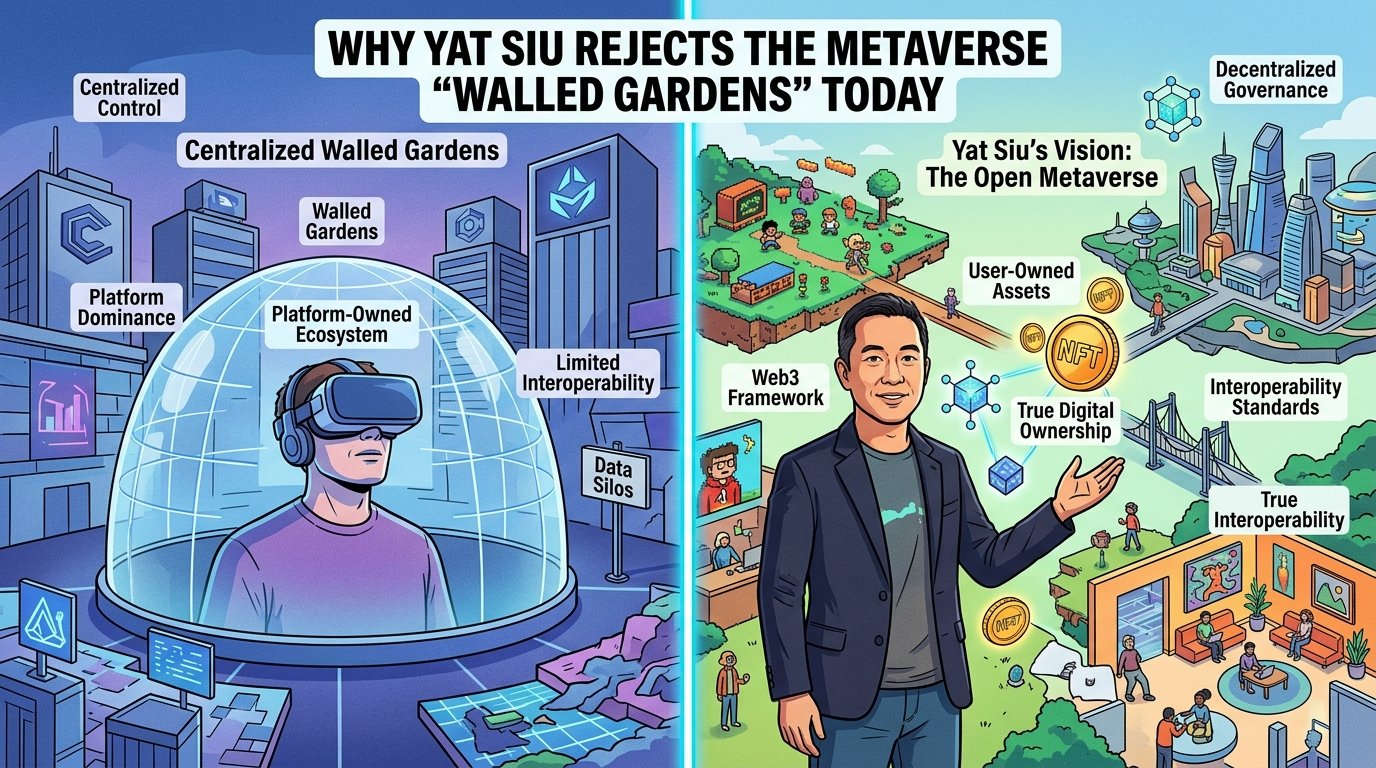
A major part of understanding Why Yat Siu rejects the metaverse is recognizing his preference for the concept of an open Web3 economy. Unlike the metaverse narrative, which often centers on entertainment and virtual reality, Web3 emphasizes ownership, decentralization, and financial participation.
In Siu’s view, the future of digital interaction is not about entering a single virtual world but about participating in a network of economies. These economies are powered by blockchain technology, enabling users to truly own digital assets such as in-game items, avatars, and virtual land.
This shift transforms users from passive participants into active stakeholders. Games and virtual environments are no longer just entertainment platforms; they become economic systems where value can be created, traded, and retained. This is a key reason behind Why Yat Siu rejects the metaverse in its traditional definition.
He believes the term “metaverse” has been diluted by marketing hype, while Web3 provides a more accurate framework for understanding digital evolution. The focus is not on immersion alone but on empowerment, ownership, and interoperability.
Blockchain Gaming as the Real Foundation
Another critical aspect of Why Yat Siu rejects the metaverse is his strong belief in blockchain gaming as the real foundation of digital worlds. Gaming, according to Siu, is already the most advanced form of virtual economy, making it the natural starting point for Web3 adoption.
Unlike traditional games, blockchain-based games allow players to own their assets in a verifiable and transferable way. This includes weapons, skins, characters, and even entire virtual properties. These assets exist outside of centralized servers, giving users real economic control.
Siu argues that this ownership model is far more important than the idea of a fully immersive metaverse. In fact, he believes that gaming will drive the evolution of virtual economies long before any unified metaverse emerges.
This perspective is central to Why Yat Siu rejects the metaverse, as it shifts focus from speculative virtual reality environments to practical, already-functioning ecosystems. Games are not waiting for the metaverse to arrive; they are actively building its economic backbone.
By prioritizing gaming, Siu highlights the importance of utility over vision. The metaverse, in its traditional sense, remains abstract, while blockchain gaming delivers real-world value today.
Digital Ownership and Economic Empowerment
A major pillar of Siu’s philosophy—and a key reason behind Why Yat Siu rejects the metaverse—is the concept of digital ownership. In traditional digital systems, users do not truly own their assets. Items purchased in games or platforms are controlled by centralized servers and can be modified or removed at any time.
Web3 changes this dynamic entirely. Through blockchain technology, users gain verifiable ownership of their digital assets. This creates new opportunities for economic participation, including trading, earning, and investing within virtual environments.
Siu believes this shift is far more important than building a singular metaverse. Instead of focusing on immersive visuals or virtual reality experiences, the real innovation lies in giving users control over their digital identities and assets.
This emphasis on ownership is central to Why Yat Siu rejects the metaverse narrative. He sees it as a distraction from the more fundamental transformation happening in digital economies. Ownership, not immersion, is what will define the next era of the internet.
Interoperability Over Isolation
Another important dimension of Why Yat Siu rejects the metaverse is his focus on interoperability. In many traditional metaverse concepts, digital worlds are isolated ecosystems where assets cannot move freely between platforms. Siu challenges this idea directly.
He envisions a future where digital assets, identities, and experiences can move seamlessly across multiple platforms. This means a character, item, or achievement in one game could be used in another without restriction.
This interconnected model reflects the true spirit of Web3. Instead of building isolated virtual worlds, developers are encouraged to create open systems that communicate with each other. This approach fosters innovation, competition, and user empowerment.
Siu’s rejection of a closed metaverse is therefore not about rejecting virtual environments but about rejecting fragmentation. This is a core reason behind Why Yat Siu rejects the metaverse as a centralized concept.
He believes that openness will ultimately define the success of digital ecosystems, not exclusivity or control.
The Shift from Hype to Sustainable Value
A significant part of Why Yat Siu rejects the metaverse also involves his critique of hype-driven narratives. During the peak of metaverse enthusiasm, billions were invested in projects that promised fully immersive virtual worlds. However, many of these projects failed to deliver meaningful user adoption.
Siu emphasizes that sustainable value creation is more important than speculative excitement. Instead of chasing futuristic visions, the focus should be on building systems that generate real economic activity today.
This includes blockchain gaming, decentralized finance integration, and user-owned digital economies. These systems are already functional and continue to evolve, unlike many metaverse projects that remain conceptual.
By shifting focus away from hype, Siu reinforces Why Yat Siu rejects the metaverse as a dominant narrative. He sees it as an outdated framing that distracts from the real technological and economic transformations underway.
The Future Beyond the Metaverse Label
Ultimately, Why Yat Siu rejects the metaverse comes down to semantics and vision. He does not reject the underlying technologies or possibilities of immersive digital worlds. Instead, he rejects the limitations of a single label that no longer accurately represents the direction of innovation.
The future he envisions is not a single metaverse but a vast ecosystem of interconnected digital economies powered by Web3 innovation, blockchain gaming, and digital ownership. In this future, users are not confined to one world but can move freely across many.
This shift represents a broader transformation in how we think about the internet itself. It is no longer about centralized platforms or singular experiences but about decentralized networks of value and interaction.
Conclusion
The question of Why Yat Siu rejects the metaverse is ultimately about redefining how we understand digital evolution. Rather than embracing a narrow and often commercialized vision of a unified virtual world, Siu advocates for a more open, interoperable, and user-owned ecosystem.
His perspective highlights the importance of blockchain gaming, digital ownership, and Web3 economies as the real drivers of the next internet era. While the metaverse narrative may still hold cultural appeal, its limitations have become increasingly clear.
In the end, Siu’s rejection is not of the future itself, but of a constrained interpretation of it. The real opportunity lies not in a single metaverse, but in a decentralized network of possibilities.
FAQs
Q. Why Yat Siu rejects the metaverse concept?
He rejects it because he believes the term is overly centralized and misleading, focusing more on marketing hype than real digital evolution.
Q. Does Yat Siu oppose virtual worlds?
No, he supports virtual environments but believes they should be decentralized and interconnected rather than part of a single metaverse.
Q. What does he believe is the future instead of the metaverse?
He supports an open Web3 ecosystem built on blockchain gaming, digital ownership, and interoperable digital economies.
Q. Why is blockchain gaming important in his vision?
Blockchain gaming enables real ownership of digital assets, making it a foundational element of future digital economies.
Q. How does his view differ from traditional metaverse ideas?
Traditional metaverse concepts focus on immersive single platforms, while Siu emphasizes open, interconnected systems with user ownership and economic freedom.
